


Articles
What is cardiac rehabilitation?
Feb 23, 2025
Read more
Your MRI shows a disc bulge, but what does this actually mean for your back pain? Learn more about disc bulges and how physiotherapy can help!
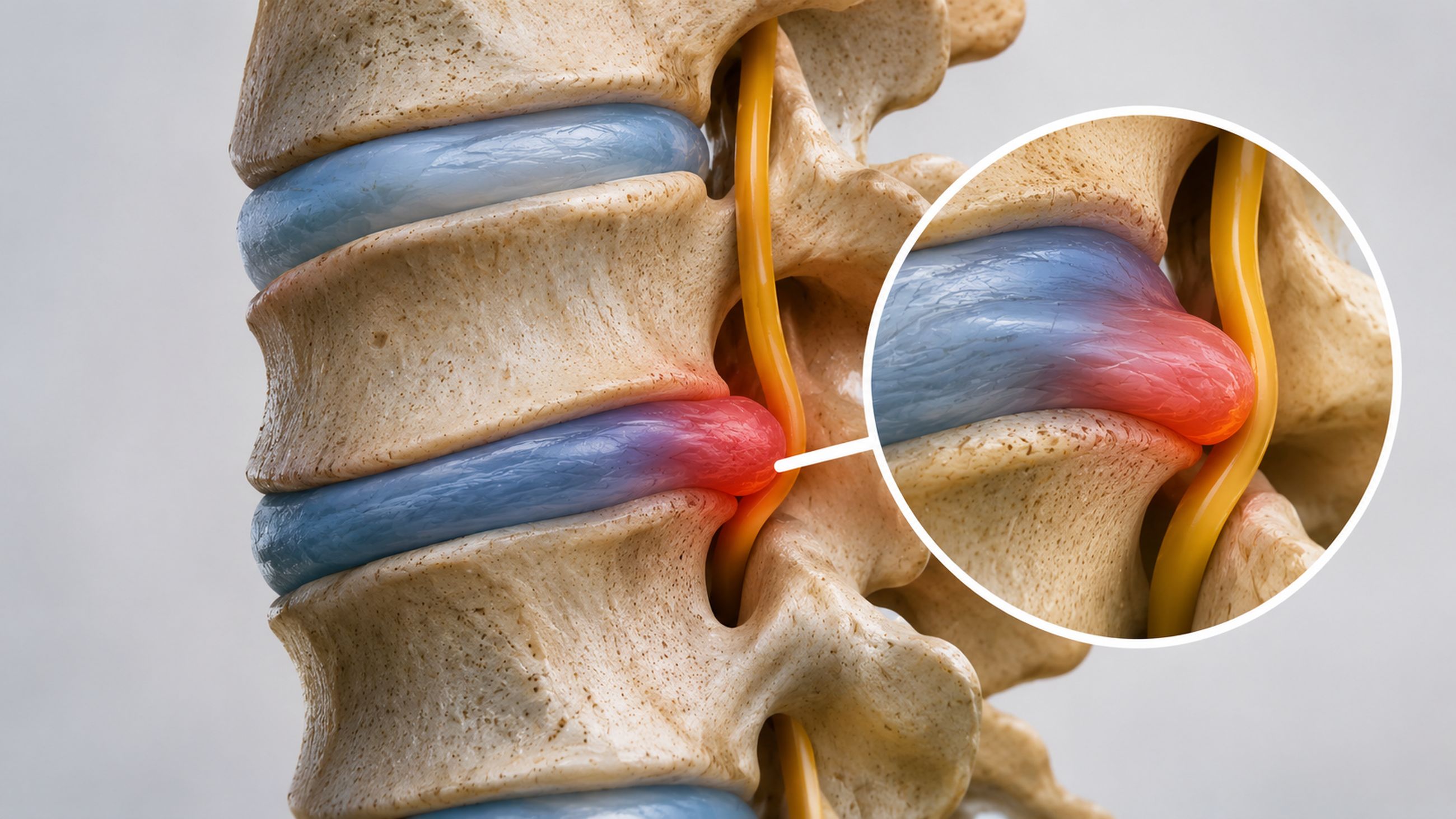
You've been experiencing back pain for weeks, or perhaps even months, and it's starting to affect your everyday activities. Whether it's sitting at work, getting out of bed in the morning or simply bending down to pick something up, movements that were once easy have now become painful. After finally getting an MRI scan, you're told that you have a disc bulge in your lower back. Naturally, this can sound quite concerning, especially when you're already dealing with pain!
So what exactly is a disc bulge, and does this mean you've permanently damaged your back?
Your spine is made up of a series of bones, with soft, cushion-like discs sitting between them. These discs act like shock absorbers, helping your back handle everyday movements such as bending, twisting and lifting.
A disc bulge happens when one of these discs pushes out slightly beyond where it would normally sit. Sometimes, this can put pressure on nearby nerves, causing back pain, shooting pain down your leg, pins and needles or even weakness.
Interestingly, disc bulges are actually quite common, even in people who have no back pain at all! Just like the rest of our bodies, our spines naturally change as we get older. It's possible to have a disc bulge without experiencing any symptoms, meaning some people may have one without even knowing about it!
However, this doesn't mean that your disc bulge isn't causing your pain. In some cases, a disc bulge can be an important reason why someone is experiencing symptoms, especially when a nerve is affected. The important thing to understand is that an MRI scan only tells us part of the story.
Two people could have very similar MRI results, but one might struggle to get out of bed or sit comfortably while the other has no pain whatsoever.
So how do we know whether your disc bulge is contributing to your pain?
At Physio Partners, rather than relying on your MRI report alone, we look at how you move, what makes your pain better or worse, and whether your nerves are being affected.
Does sitting for too long make your back ache? Does bending forward make things worse? Are you experiencing shooting pain down your leg? By looking at your symptoms alongside your MRI findings, we can get a better understanding of what's happening and work out the most appropriate way to manage your condition.
The good news is that many people with disc-related back pain can improve without needing surgery!
Depending on your symptoms, physiotherapy may involve a combination of hands-on treatment, advice on managing your pain and exercises to help improve your movement and strength.
In the early stages, treatment may focus on helping you manage your pain and making everyday activities more comfortable. As your symptoms settle, we can gradually introduce more challenging exercises to build your strength and help you return to the activities you've been struggling with.
One thing we often encourage is to keep moving as much as you comfortably can. While resting might feel like the best option when your back is painful, spending too much time in bed can make it harder to get moving again. Even simple activities, such as short walks or gentle movements, can be a good starting point, depending on your symptoms.
It's also worth remembering that your disc bulge doesn't necessarily need to disappear on an MRI for you to feel better. The goal of treatment isn't simply to change what your scan looks like, but to help you move more comfortably, build your confidence and return to the things you enjoy.
So if your MRI report mentions a disc bulge, don't automatically assume that your back is permanently damaged or that surgery is your only option.
At Physio Partners, we're here to help you understand what's happening with your back and guide you through a treatment plan suited to your needs, so you can get back to moving with confidence!
Please seek urgent medical attention if you develop new difficulty controlling your bladder or bowels, numbness around your groin or bottom, or rapidly worsening weakness in your legs.